Selecting a floor that stands up to constant indoor moisture determines whether your coastal home investment lasts or rots. By understanding exact material density ratings and subfloor requirements, you protect your property from buckling planks and hidden mold growth.
This technical guide reviews the performance metrics of various bathroom flooring options and explains how professional bathroom remodeling services allow you to choose materials that handle high humidity while keeping your surfaces stable.
The Core Problem with Coastal Bathroom Floors
Florida’s high dew points mean air-conditioned indoor spaces constantly pull damp air through exterior walls and unsealed foundations. This atmospheric pressure creates a regular cycle of condensation on cold bathroom surfaces during the summer months. When moisture hangs in the air, smooth finishes collect micro-droplets that slowly degrade non-resilient flooring components. The unique blend of warm marine air and interior cooling turns unprotected wet areas into high-risk zones for water retention.
Concrete slabs absorb ground moisture through capillary action and release it upward into your living space as vapor. Unprotected subfloors allow this water vapor to accumulate directly beneath your surface tiles or planks. Over time, this hidden moisture weakens standard construction glues and causes low-grade backer boards to swell. Stopping this destructive cycle requires specialized barriers and dense finish materials that block moisture migration completely.
To help identify structural water hazards early, watch for these common local indicators:
- Buckling Planks: Occurs when subfloor vapor pressure forces interlocking vinyl or wood joints upward.
- Adhesive Failure: Happens when standing concrete moisture liquefies standard builder-grade glues.
- Grout Cracking: Caused by shifting subfloors or water expanding within open cement pores.
- Microbial Growth: Triggered when trapped condensation sits in dark spaces under non-breathable materials.
Porcelain Tile vs Ceramic Tile in High-Moisture Zones
Homeowners frequently struggle to differentiate between clay-based options when planning a property upgrade. Choosing the wrong category compromises the structural integrity of your floor assembly within a few seasons. Working with premier bathroom renovation companies helps clarify these technical distinctions before you sign a material purchase agreement. Let us look at the precise engineering parameters that separate these two common options.
Water Absorption and Core Density Differences
Porcelain tile features a verified water absorption rate of less than 0.5%, which categorizes it as near impervious. This exceptional resistance comes from highly refined clays fired at extreme industrial temperatures. The extreme firing temperature melts the minerals into a solid glass-like structure that expels open air pockets. This structural density prevents water from entering the body of the tile even when submerged.
Standard ceramic tile exhibits a significantly higher absorption rate that ranges between 3% and 7% under identical testing conditions. This porous composition allows liquid to penetrate the tile body if the top glazed layer cracks or wears down. Because ceramic has a lighter and softer core, it fails faster when exposed to steady ambient humidity. For coastal properties, installing ceramic on high-use bathroom floors introduces an unnecessary risk of deep moisture absorption.
| Material Property | Porcelain Tile Standard | Ceramic Tile Standard |
| Water Absorption Metric | Less than 0.5% (Impervious) | 3.0% to 7.0% (Porous Base) |
| Core Composition Type | Dense, highly refined clay | Coarser, less dense baking clay |
| Hardness Rating | Class 4 or 5 (Heavy Foot Traffic) | Class 2 or 3 (Light to Moderate) |
| Installation Cutting Tool | Wet diamond blade saw required | Manual score-and-snap cutter |
| Long-Term Warp Resistance | High stability under vapor pressure | Prone to swelling if glaze cracks |
Grout Selection and Long-Term Sealing Realities
While the face of a high-quality porcelain slab repels water, standard cement-based grout lines remain open and porous. Cement grout acts like a hard sponge, pulling residual water from your shower down into the thinset mortar below. To stop this absorption, professional teams utilize advanced epoxy grout or polymer-modified compounds. These specialized materials create a shield that blocks standing water and prevents structural damage behind the tile layer.
Scheduling a regular application of a high-performance penetrating sealer is necessary to keep your floor assemblies dry. Homeowners who partner with established bathroom renovation companies secure long-term warranties by ensuring their contractors install waterproof uncoupling membranes over concrete slabs. These flexible underlayment sheets isolate the tile from minor foundation movements while forming an unbroken drainage layer. Proper grout management protects the subfloor from the rot issues that plague rapid builder-grade renovations.
Luxury Vinyl Plank Performance in Humid Space Coast Climates
Luxury vinyl planks have grown popular because they replicate the visual appeal of natural hardwood without the threat of water rot. However, selecting the wrong plank composition can lead to premature floor failure in coastal environments. Experienced contractors utilize strict material criteria to separate high-performance options from cheap retail products. Understanding the internal chemistry of these planks reveals how they behave when room humidity levels fluctuate.
Understanding SPC and WPC Waterproof Layers
Modern luxury vinyl plank flooring is split into two primary engineering categories based on internal core chemistry. Stone Plastic Composite, known as SPC, uses a combination of natural limestone dust and polymer stabilizers to form an inert core. This dense core is completely waterproof and stays structurally stable when temperatures swing from seasonal air-conditioning changes. Planks built with this limestone compound resist warping and will not expand or shrink when exposed to vapor pressure.
Wood Plastic Composite, known as WPC, uses air-infused pulped wood and plastic foaming agents to create a softer surface underfoot. While WPC provides excellent comfort, its internal fibers remain slightly more sensitive to severe shifts in atmospheric moisture. Local building specialists favor rigid SPC flooring for small, high-humidity bathrooms because it prevents edge-lifting at the seams. Selecting the limestone-based option ensures that your high-traffic paths remain flush and tightly locked for decades.
Why Installation Prep Over Subfloors Determines Longevity
Installing luxury vinyl plank flooring over concrete slabs requires an unbroken six-mil poly-film vapor barrier. Skipping this simple material step allows subfloor vapor emittance to rise and collect directly under the click-lock joints. The trapped water vapor creates an environment for microbial growth and slowly breaks down the product’s backing material. A professional floor installation must seal the entire perimeter with waterproof silicone to isolate the subfloor from room humidity.
The concrete foundation must be sanded down or filled until it matches a level flatness tolerance of less than 3/16 of an inch over a ten-foot radius. Uneven subfloors cause vinyl planks to flex under standard traffic, which eventually breaks the interlocking tracks. Relying on professional bath remodel services ensures your subfloor remains dry and completely stable. Homeowners can also plan for these vital leveling steps by reading our comprehensive guide on a budget home renovation Florida (Space Coast).
Safety and Texture Rules for High-Humidity Bathrooms
A resilient bathroom floor must perform well under moisture loads while protecting occupants from physical harm. High humidity combined with smooth surfaces increases the risk of household accidents. Integrating clear physical safety standards into your material selection process prevents common slip injuries. Let us examine the exact measurements required to keep your bathroom safe for all family members.
Friction Factors that Prevent Slips on Wet Surfaces
Slippage hazards rise when airborne moisture forms a slick layer of condensation over polished interior finishes. To address this risk, residential building standards recommend utilizing floor tiles that carry a verified Dynamic Coefficient of Friction rating of 0.42 or higher. This specific friction metric guarantees that a wet surface still provides enough mechanical grip to support safe walking with bare feet. Homeowners can secure these high-grip options by contracting verified bathroom remodeling services that source commercial-grade materials.
Glossy glazed finishes lack this necessary surface tooth and become hazardous when water drops collect from steamy showers. Matte finishes or sand-blasted stone options break up liquid surface tension to prevent dangerous slipping incidents. Small mosaic tiles also offer built-in safety benefits because the dense grid of grout lines naturally increases your foot’s grip. Balancing aesthetic preferences with clear friction ratings keeps your wet areas accessible and safe for multi-generational use.
Review these core flooring specifications to keep your active wet zones safe:
- Dynamic Coefficient of Friction (DCOF): Always check that the material is stamped with a rating of 0.42 or greater for wet environments.
- Matte or Textured Glazes: Avoid high-gloss polishes that turn into glass-smooth sheets when condensation hits.
- Grout Line Frequency: Smaller tile profiles like two-by-two mosaics introduce more grout channels, raising structural traction.
- Raised Relief Patterns: Planks or tiles with molded grain textures provide physical channels that push water away from the sole of your foot.
Low-Contrast Patterns for Better Depth Perception
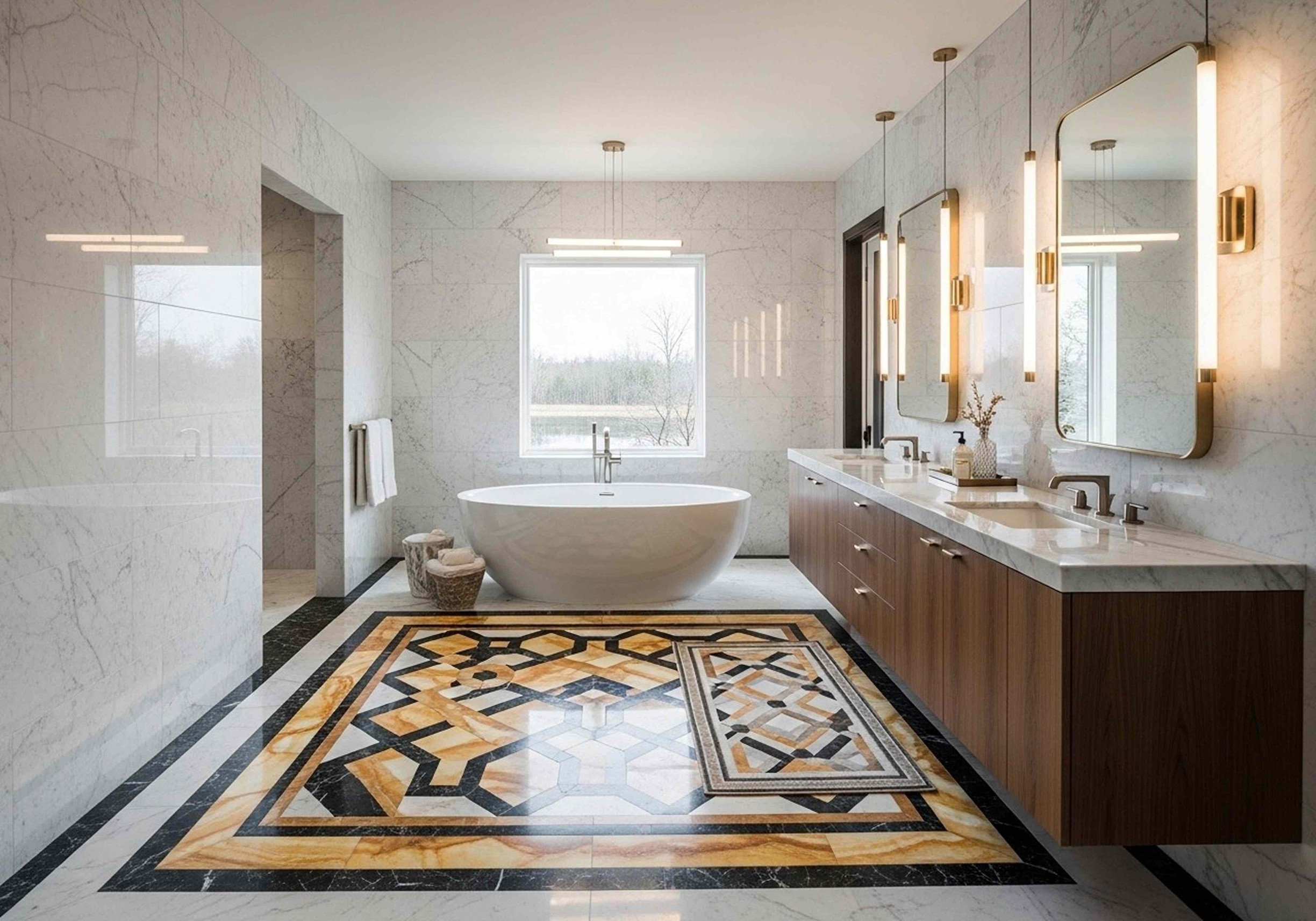
Safety research indicates that bold, high-contrast floor patterns often trigger serious depth perception errors for aging family members. Dark geometric lines running across a light tile floor can be misread by the human eye as physical steps or sudden drop-offs. These visual misinterpretations disrupt natural walking gaits and increase the likelihood of unexpected falls on hard surfaces. Designing a safe space requires choosing uniform colors and smooth visual transitions that keep the walking path predictable.
Selecting a grout color that matches the primary tone of your tile minimizes high-contrast grids that strain your vision. This approach keeps the visual background calm and lets occupants judge distances and wet spots with greater accuracy. High-gloss sealers that produce sharp light reflections should be avoided in favor of flat, low-glare matte treatments. Keeping the surface visually consistent across the entire layout reduces stress and protects individuals with limited mobility.
Designing a Climate-Resilient Bathroom Floor
Selecting your bathroom materials based on verified environmental testing data shields your household from unexpected long-term remediation costs. Peer-reviewed data from the University of Florida SAMPL resilience study highlights how computational models help homeowners assess structural responses to water intrusion risks. This state-backed research confirms that choosing adaptive, moisture-impervious finishes helps preserve property valuations over time. Incorporating these science-supported resilient standards into your residential floor layouts can lower your insurance liabilities and protect structural foundations from coastal decay.
Executing these technical material choices requires a licensed contractor who understands the exact environmental pressures of East Florida’s climate. Building a code-compliant barrier system involves managing exact density metrics, setting correct slope gradients, and utilizing certified waterproofing bands.
Homeowners who select experienced bath remodel services ensure their projects bypass common contractor pitfalls and structural failures. Skyden Contractors holds active license number #CBC1259579 and provides professional residential building expertise throughout the Space Coast territory to ensure your investments stand up to coastal environmental demands.
Conclusion
Building a durable bathroom requires balancing moisture imperviousness with structural safety rules. From choosing porcelain tiles with a low absorption rate to prepping concrete subfloors with vapor barriers, every single step protects your space.
Homeowners who invest in certified bathroom remodeling services ensure their renovations resist high humidity without warping or growing mold. Contact Skyden Contractors today to request an accurate installation quote for your residential home repair project.